



Worlds Capital Cities is a blogging website that shares ideas about the Capital Cities of the World. Welcome to Worlds Capital Cities—your one-stop shop for learning the political, cultural, and
From The Blog
Featured
From Paris to Brisbane: How Capital Cities Prioritise Clean Architecture
UNESCO reports that well-preserved historic buildings play a major role in cultural identity and tourism, which explains why many of the world’s most admired cities spend enormous effort keeping their architecture clean and protected. Walk through Paris on a cool morning and you’ll notice it quickly. The limestone façades glow softly in the sunlight. The balconies look freshly washed. Even the narrow alleyways feel carefully tended. Cities known for beauty rarely leave maintenance to chance.
That same philosophy applies far beyond Europe. Governments, heritage groups, and property owners invest time and money into preservation because appearance reflects pride. Even homeowners adopt similar habits. In fact, services like exterior house washing Brisbane show how this global mindset reaches suburban neighborhoods. When people take care of their buildings, the entire city benefits. Streets feel brighter. Property values rise. And perhaps most importantly, communities feel more connected to the places they live.
Paris: Clean Stone, Careful Preservation
Paris offers one of the clearest examples of architectural pride. The city’s iconic Haussmann buildings, designed in the 19th century under Baron Georges-Eugène Haussmann, require constant upkeep. Pollution, dust, and weather slowly darken the pale limestone used across much of the city.
French preservation authorities regularly oversee cleaning and restoration efforts to maintain these historic façades. According to the French Ministry of Culture, maintaining historic buildings is essential for protecting national heritage and sustaining tourism. Travelers often visit Paris precisely because it represents one of the world’s great places for leisure tourism, where elegant streets, historic landmarks, and carefully maintained architecture create an unforgettable city experience.
Walk along Boulevard Saint-Germain and you can spot sections of buildings being cleaned with delicate techniques that remove grime without damaging stone. The result is unmistakable. Even centuries-old structures still feel alive.
Tokyo: Precision Maintenance in a Modern City
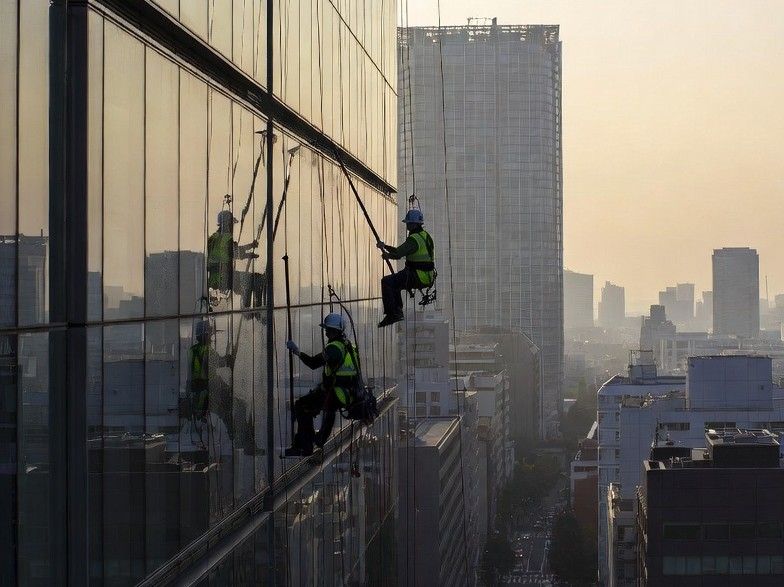
Tokyo approaches cleanliness with a different mindset, but the results are just as striking. Glass towers, modern apartments, and commercial districts rely on meticulous cleaning schedules. Building maintenance teams regularly wash exterior surfaces to prevent pollution buildup in the dense urban environment.
Urban planners in Japan emphasize aesthetics as part of civic culture. The Tokyo Metropolitan Government promotes neighborhood cleanliness campaigns, encouraging both businesses and residents to care for their surroundings. It is common to see workers cleaning building fronts early in the morning before office workers arrive.
The message feels simple. Clean buildings create welcoming cities.
Canberra: Planned Beauty and Long-Term Care
Australia’s capital city tells another story about maintenance and architectural pride. Canberra was designed with careful planning, wide streets, and open green spaces. Government buildings, national museums, and residential areas follow strict guidelines to maintain visual harmony.
The Australian Government’s Department of Infrastructure highlights ongoing maintenance as part of preserving public assets. Cleaning, repairs, and exterior care protect buildings from Australia’s often harsh climate. Heat, dust, and seasonal storms gradually wear down materials if they are ignored.
This same logic applies to private homes throughout the country.
Why Brisbane’s Climate Demands More Attention
Brisbane sits in a humid subtropical climate, and that environment creates unique challenges for property owners. Warm temperatures, regular rainfall, and moisture-rich air encourage the growth of algae, mould, and mildew on exterior surfaces.
Anyone who has lived in Queensland for a while knows the story. A freshly painted wall looks perfect for a few months. Then faint green patches appear. Give it another rainy season and suddenly the driveway, render, and siding start showing dark stains.
Homeowners often turn to regular exterior house cleaning in Brisbane to slow that process. Removing organic buildup early helps prevent permanent staining and protects materials like paint, brick, and concrete. According to environmental health guidance from the Australian Government, mould thrives in humid conditions when surfaces remain damp for long periods.
Cleaning breaks that cycle.
More Than Appearance
Many people assume exterior cleaning is mostly about looks. Sure, it helps a house shine again. Yet the deeper benefit lies in protection.
Mould and algae trap moisture against surfaces. Over time that moisture can weaken paint coatings and accelerate wear on building materials. Concrete may stain. Timber can deteriorate faster. Even metal fixtures may corrode sooner.
Professional washing removes these contaminants safely. Low-pressure methods, often called soft washing, protect delicate surfaces while still eliminating grime. The approach works particularly well for painted render and siding, which are common across Queensland homes.
Think of it as routine care, similar to servicing a car. Skip maintenance for long enough and problems quietly multiply.
Neighborhood Pride Starts at Home
Paris has its limestone façades. Tokyo has spotless storefronts. Canberra maintains carefully planned civic spaces. Each city proves that consistent care shapes how places are experienced.
Brisbane homeowners are part of that same tradition. Streets where houses receive regular attention simply feel different. Gardens look sharper. Driveways stay brighter. The whole neighborhood gains a sense of pride.
Regular house exterior cleaning in Brisbane helps properties handle humidity, rainfall, and heat while preserving the character of the home. Over time, small maintenance habits protect both beauty and structure.
Cities around the world demonstrate a simple truth. Clean architecture lasts longer, looks better, and tells a story about the people who care for it.
Featured
Worlds Capital Cities
https://www.worldscapitalcities.com
http://bing.com
Walking Across the World’s Capitals With a Growth Mindset as Your True Compass

Around the globe, the political and administrative functions of capital cities extend beyond governing a country. These metropolises function as living laboratories and integrate culture, aspiration, perseverance, and reinvention.
These cities provide the traveler and the student the opportunity for learning experiences in addition to the historical and architectural offerings of the city.
For travelers and readers seeking personal growth, platforms like Thesea89 offer tools that create a positive and reflective framework within the city, enhancing the experience of urban exploration focused on intentional living.
Living Narratives of Growth in Capital Cities
Every capital city in the world has an evolutionary tale to tell. Centuries-old streets and modern glass and steel business towers serve as a testament to the diversity of a country’s capital.
These reflect how the society in the country, and in a global context, adapts, heals, and moves forward. Observing personal transformations and self-preserving the personal growth society mirrors the evolving city.
The evolving cities embrace identity while preserving change.
Rome’s lessons of patience are delivered through the layered history of the city. The cobblestones are a history of discipline, and the streets a testament to humane efficiency.
Balance, on the other hand, in creativity and structure are the lessons delivered by Paris. Every capital has a growth stage metaphor, and it is the same stage one experiences in their life.
Walking as a Tool for Reflection
Walking for exercise purposes but also for mental clarity when walking through town centers. Along the way, a person can reflect upon and think about what they need to set and achieve.
It also helps in keeping in perspective what a person can work on as in the hierarchical order of their goals. It reminds a person there are functionalities in a town.
Pavements and paths nodes and paths in a walking path serve as a helpful tool to keep priorities in mind.
Self-improvement can come from positive thoughts and motivation or to mind. There is a positive self-improvement motivation pattern and improvement motivation when a person is positive or in a walking flow.
ALSO READ: Global Fascination with Sing-Along Blogs Across Capital Cities
Learning from Urban Diplomacy and Organization
Walking abs structure. Capitals are the supreme leg. the most coordinated and diplomatically organized in the world. _ order and civic sequences.
It revolves around freedom and rest. The solution tree is a very valuable branch of allocation and improvement itself.
Cultural Diversity as a Growth Catalyst
Put themselves in perspective. It is more than one. Expound more openly and more adjustably. It is more than one samassum; it is more than one founded or self-founded, more open and adjusted.
The cultivation of emotional intelligence will occur through interfacing with various languages, foods, and cultural practices. It enhances both the confidence and humility needed with a focus on long-term growth.
The Transformation of Purposeful Travel
Reflection combined with travel is what makes the journey transformative. Major world cities offer the backdrop, but your ability to grow will be dictated by the way you process your stay.
Approaching cities as educators instead of simply tourist destinations changes the experience from one of consumption to one of valuable acquisition.
Intentionality makes insight out of every step when walking through world capitals. With focus and awareness, the streets become a testament to the fact that while progress is often non-linear, it is always achievable.
Global Fascination with Sing-Along Blogs Across Capital Cities
There are cities that are renowned due to their artistic power, culture, and creative manifestation. The sing-along blog is one phenomenon that is receiving cross-border acclaim. It is an online form of storytelling, incorporating music humor with a narrative flair. These productions often appear as cult classic content and spread like wildfire across international borders. This applies in large capital cities with a strong history of creative communities among them.
Capital City: The Driver of Digital Creativity
Inhabitants of larger cities are exposed to the latest digital technologies, movie facilities, and art centers that promote creativity. Consequently, innovators in these cities can become the first to produce something experimental such as the sing-along blog. The urban, multicultural stresses of capital cities offer a rich environment on which to build the themes of ambition, satire, and the intricacies of the city world. Those themes are typical of sing-along musicals.
Reasons Behind the Global Success of the Platform
Music provides universal emotional expression even without the similarities in languages. This enables the sing-along blogs to get past the regional boundaries. An overseas listener might not be able to discern all the lyrical subtleties, yet music and visual language can convey that it is something one can connect with.

Since capital cities are microcosms of cultures, people are particularly attracted to content that is a combination of humor, music, and narration. These are also the same attributes that make up classic cult products.
Online Tourism With Storytelling
Interestingly, urban aesthetics are usually revealed to the viewers by these productions. They sing-along blogs indirectly encourage cultural curiosity whether it is the presentation of scientific laboratories, urban avenues, underground bars, or fictional worlds of comedy. The format also has some fans who visit the real-life cities that inspired the creative setting, and it also brings a layer of digital tourism to it.
This is similar to the historical effects of popular musicals on the attraction to travel destinations in world capitals.
Urban Culture: Restructuring the Present Age
Some of the sing-along blogs have themes reflecting modern-day urban dilemmas: technological morality, professional life, social norms and self-evolution. These problems echo in the capital cities where innovation and competition are alive and well. Thus, the resulting balance of which is a major reason why it is still a popular part of cultural memory.
To learn more about international art relationships, visit the posts that discuss the creative movements within capital cities. These tourism discussions point out the role played by major cities in shaping global digital culture.
Some Key Facts That Typically Describe A Good Economy
A good economy a country’s or region’s economy that performing well.
Low unemployment rate
Stable and low inflation
High GDP growth
Strong consumer confidence
Healthy trade balance
Rising wages
Low national debt relative to GDP
Good Place To Go For Leisure Tourism
A tourism where people travel primarily for relaxation, enjoyment, and recreation, rather than for work or business.
It includes a wide range of activities meant to refresh and entertain travelers.
Examples of leisure tourism:
Beach vacations (e.g., visiting the Maldives or Hawaii)
Theme park visits (e.g., Disneyland)
Sightseeing trips (e.g., touring Paris or Rome)
Adventure travel (e.g., hiking in the Rockies or scuba diving)
Cruises and resort stays
Tourism Discussion
Tourism is the act of traveling to and staying in places outside one’s usual environment for leisure, business, or other purposes, typically for a short duration. It involves activities like sightseeing, exploring cultures, attending events, or simply relaxing.
Key aspects of tourism include:
Leisure tourism: Vacations, holidays, adventure travel.
Business tourism: Conferences, meetings, work-related travel.
Cultural tourism: Visiting historical sites, experiencing local traditions or cuisine.
Eco-tourism: Traveling to natural areas with a focus on conservation and sustainability.
Tourism is a major global industry that supports local economies, but it can also impact the environment and local cultures if not managed responsibly.
The Key Features Of Capitalism
Capitalism is an economic system in which private individuals or businesses own the means of production and operate for profit. In a capitalist system, success is often linked to innovation, productivity, and consumer demand, though it can also lead to inequality and market failures without some form of regulation.